How a Kid Who Loved AI Made It to a NeurIPS Workshop @17
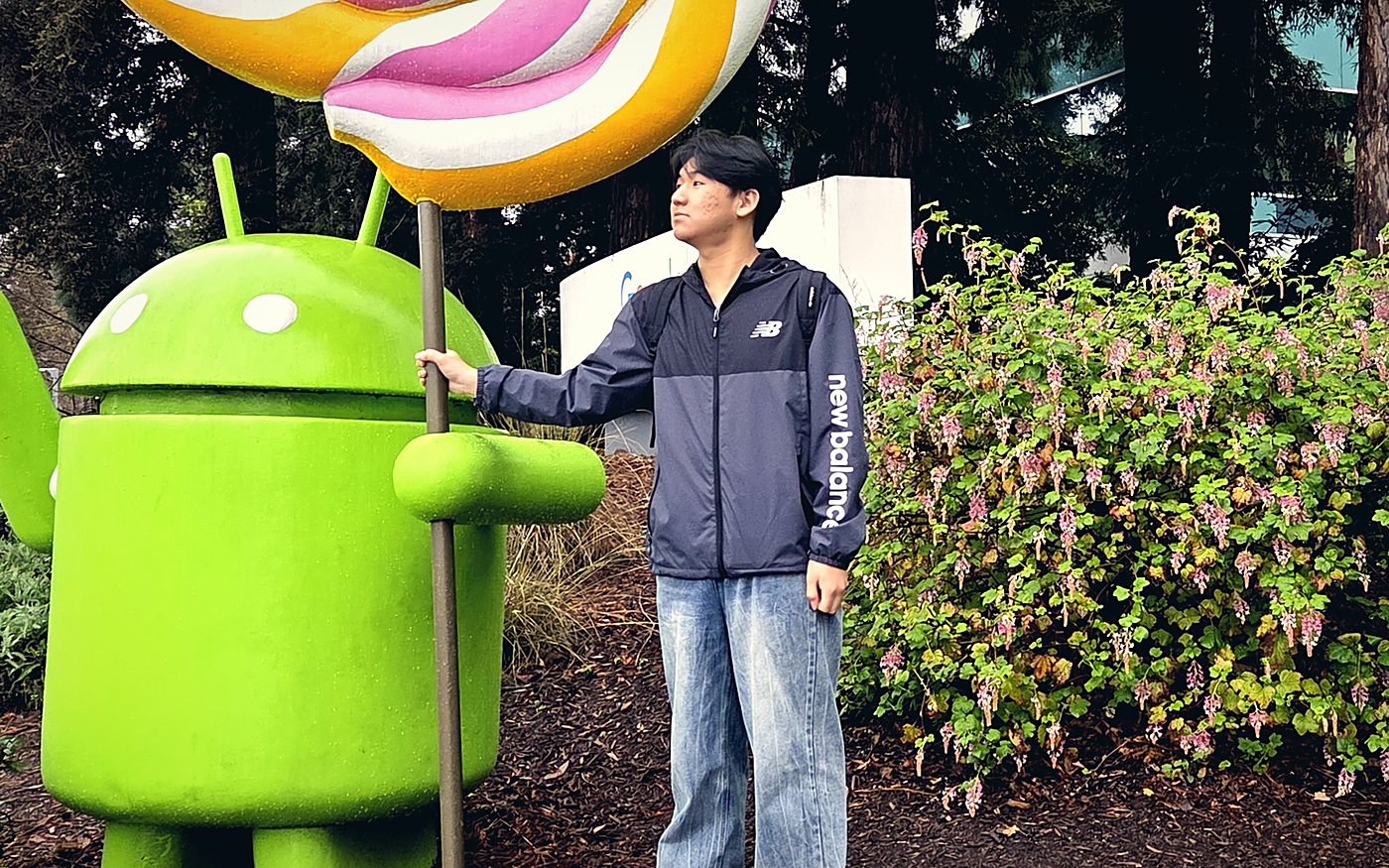
In my first year of high school, a teacher once said something in passing.
You’re not geniuses like Wernher von Braun. You can’t write a paper in high school. Just study.
At the time, I was interested in AI, but I had no intention of doing research. The teacher probably meant nothing by it, and no one else in that room likely remembers it. But I found myself asking a question for the first time: Why do we say we can’t write papers? Does writing a paper as a high schooler really require being a genius?
A lecture at an airport in Taiwan
The summer after freshman year, I was in Taiwan, waiting at the airport to fly home. Maybe because Taiwan is the home of TSMC, there was a sculpture made of semiconductor circuitry behind me. Outside it was dark, and the airport was quiet. I opened YouTube to kill time, and a Stanford CS221 lecture on MDPs happened to come up. I started watching, and it was so interesting that I watched it for the full hour, right up until boarding. After I got back to Korea and school started again, I kept looking up related papers and lectures whenever I had time. That was the first time I understood that theory could be this fun.
The first attempt fell apart
The first time I thought I should actually do research was the fall semester of tenth grade. A friend of mine who was into aerospace and I decided to try optimizing satellite collision-avoidance maneuvers using MARL. On weekends we would go to a café a short walk from our dorm, study the CR3BP, and write a bit of code. Looking back on it now, barely a year later, it was pretty rough. No literature review, no clear research question. Just the will to “do research,” and nothing more structured than that. The project didn’t go the way we wanted, and it quietly fell apart.
The second attempt, and a paper
A few days before summer vacation in eleventh grade, our class was left largely unsupervised. Everyone else was sleeping or on their tablets and laptops, but I had a goal. I wanted to find out what an AI trained to learn orbital transfers had actually learned. This time I wrote proper code, reviewed the relevant literature, and read the papers I needed to. The research itself, it turned out, was manageable. Over the summer, I wrote and ran code on my MacBook and wrote up the paper. I genuinely wanted to talk to other researchers about my work, to meet people doing similar things. So I decided to submit it to a NeurIPS workshop.
Submitting was harder than the research
I needed an OpenReview account, but minors weren’t allowed to create one. arXiv required an endorsement, and I had no one to get one from on my own. I first emailed OpenReview explaining my situation, and got a reply two days later: they were currently discussing how to handle younger researchers, and for now, it wasn’t possible. For the next two weeks or so, I more or less gave up. Maybe the teacher had been right after all, I remember thinking.
Still, I decided to check back one more time before letting it go. Call it luck, but the policy had changed in the meantime. Anyone 13 or older could now register with a parental consent form. I got my parents’ signatures the very next weekend, and two days later, I finally had the right to submit. It’s currently under review.
Why Open-Age Academia
Plenty of students did research and published papers before me. I expect plenty more will after me. I happened to get lucky, submitting right as the policy changed. But I keep thinking about what would have happened if it hadn’t.
I don’t want anyone else to go through what I almost went through. That’s the belief Open-Age Academia was built on.